
𝐃𝐢𝐜𝐭𝐢𝐨𝐧𝐚𝐫𝐲 𝐯𝐬 𝐇𝐚𝐬𝐡𝐭𝐚𝐛𝐥𝐞 𝐢𝐧 𝐂#?.

Dictionaries and Hashtables are both data structures commonly used in C# to store and retrieve data, but they have some differences in terms of implementation and behavior.
Dictionary:
The
Dictionary<TKey, TValue>class in C# represents a generic collection of key-value pairs.It uses a hash table internally to store the key-value pairs.
Keys must be unique within the dictionary.
Provides fast lookup and retrieval of values based on keys.
Does not guarantee the order of the elements.
Supports operations like adding, removing, updating, and searching for elements based on keys.
Provides methods like
Add,Remove,ContainsKey,TryGetValue, etc.
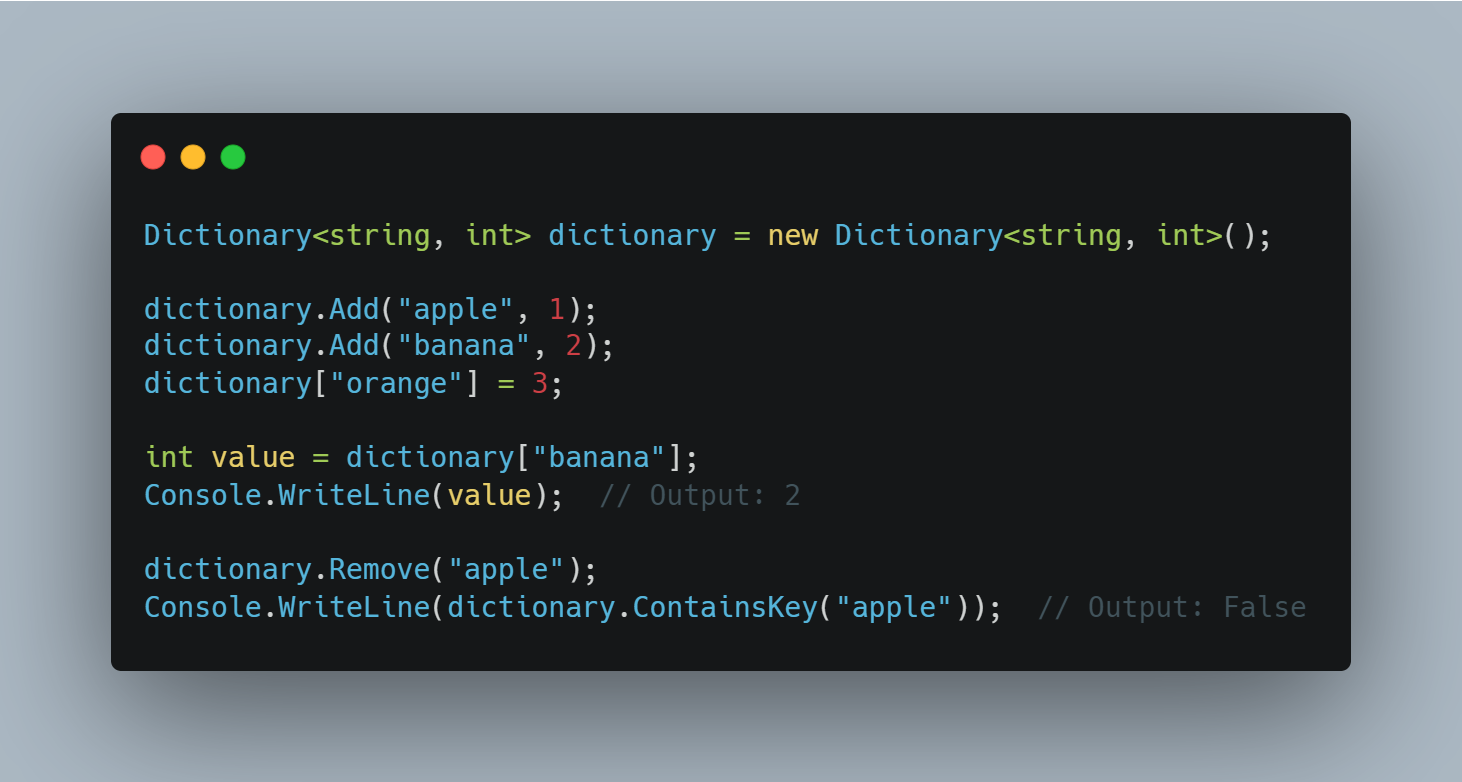
Example usage of Dictionary in C#:
Hashtable:
The
Hashtableclass in C# is a non-generic collection that stores key-value pairs.It also uses a hash table internally for efficient storage and retrieval.
Keys must be unique within the hashtable.
Provides fast lookup and retrieval of values based on keys.
Does not guarantee the order of the elements.
Supports operations like adding, removing, updating, and searching for elements based on keys.
Provides methods like
Add,Remove,ContainsKey,TryGetValue, etc.
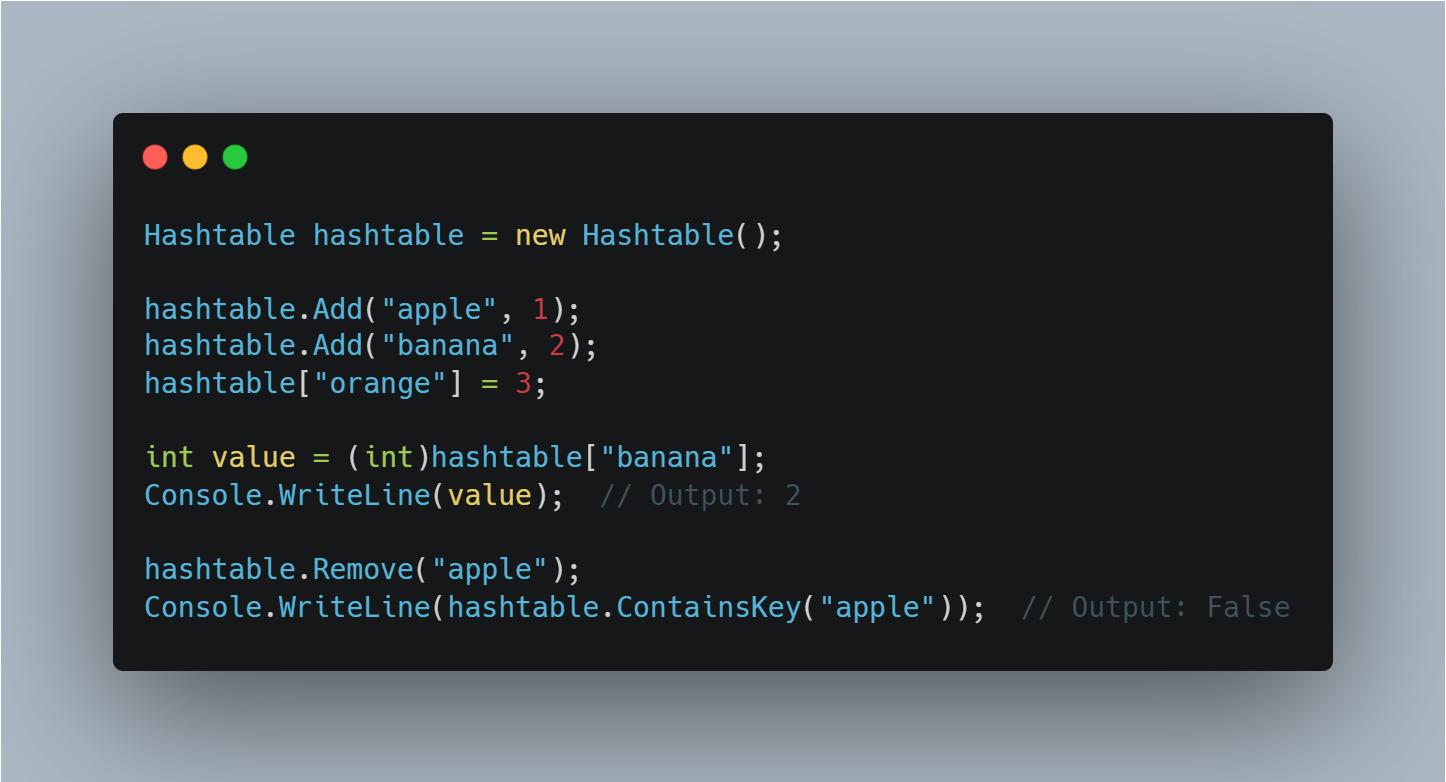
Example usage of Hashtable in C#:
Sure! Here's a side-by-side comparison of the differences between Dictionary and Hashtable in terms of their implementation and behavior:
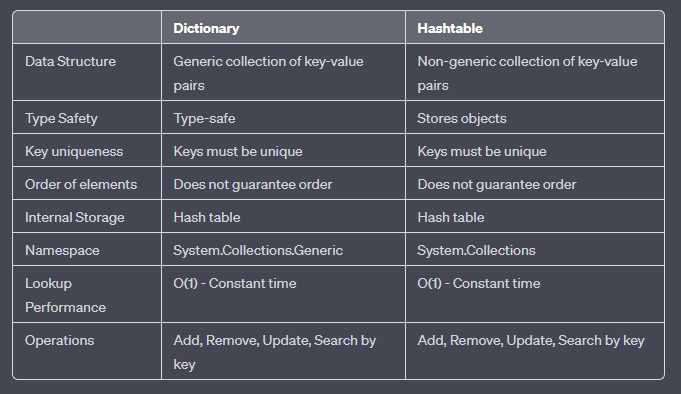
In summary, dictionaries and hashtables in C# have similar functionality and are used to store key-value pairs. However, dictionaries are part of the generic collections in C# and provide type safety, whereas hashtables are non-generic and store objects. It is generally recommended to use dictionaries for type-safe collections when possible.